
Let's save pessimism for better times
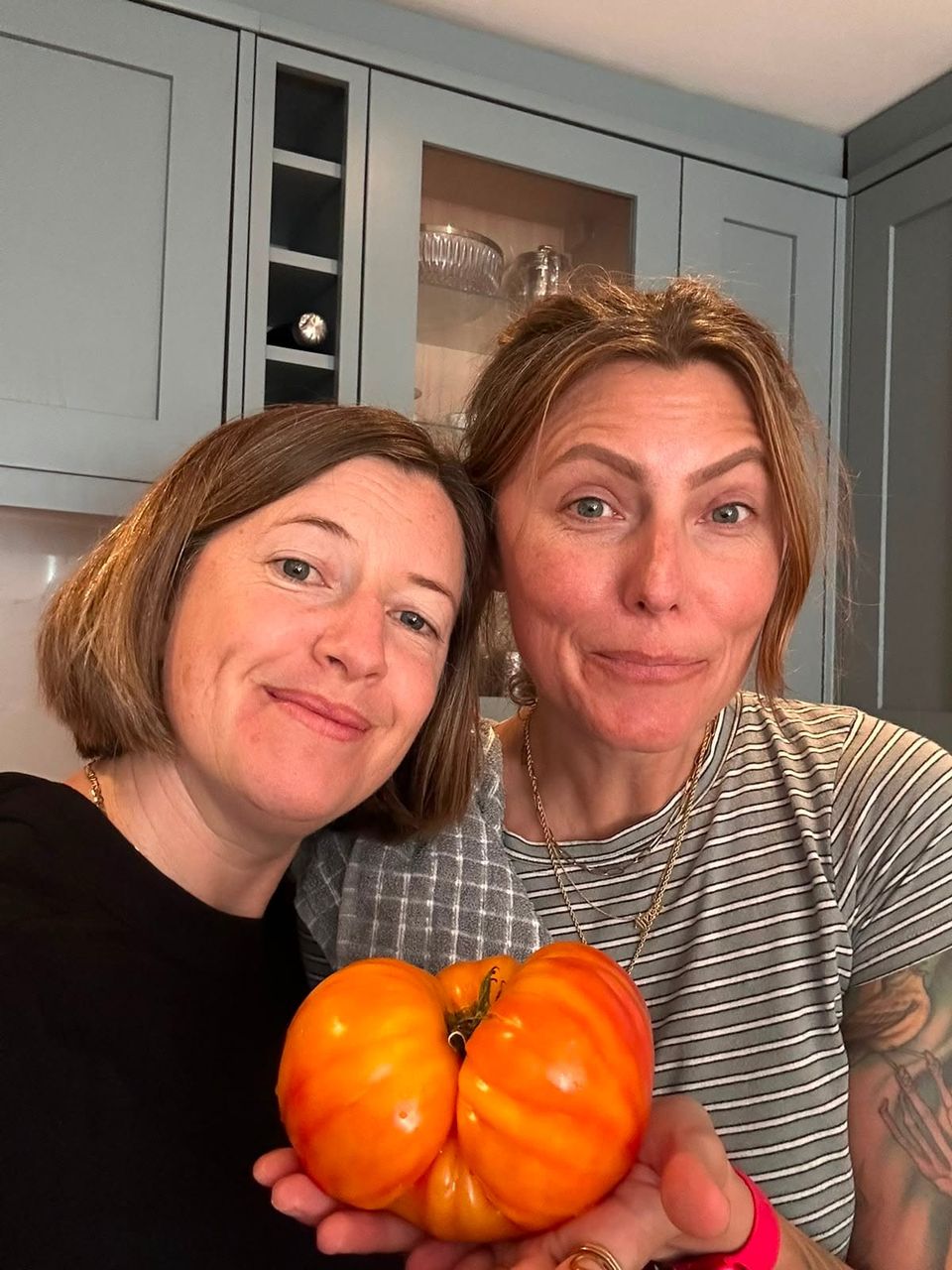
Hello loves!
I've been fantasising a lot recently about moving to a commune with all my friends. Isn't everyone? Or is this just the perpetual state of every burnt-out anxious-overachiever-in-recovery?
It got as far as me browsing vacant plots on property websites and reading long, detailed guides to how people manage to the finances and decision-making in coliving communities.
Blame the summer, the lazy warmth that has me dreaming of lounging on a lawn eating strawberries with my head lying on the belly of a friend whose head is lying on the belly of another friend, every laugh sending a ripple of tummy-fat-wobbling joy through the whole daisy chain of heads and bellies. I want to grow huge prize-winning marrows in a shared garden plot and slice them with a vegetable peeler into a salad bowl the size of a bucket, fit for feeding twenty. I want to play make-believe with a roving gang of my friend's children. I want to lounge on the muddy cool banks of a pond next two 3-5 of my favourite people while we all read books in companionable silence, pausing frequently to read our favourite sentences to each other out loud. I want to fall asleep to the cheerful sounds of ten other people breathing, farting and snoring. The days feel long and luxurious and ripe to be shared with as many people as possible.
To be fair, I have been doing at least some of these activities (thank you Hampstead Heath Ladies Pond, thank you this season's especially delicious tomatoes, thank you all the wonderful friends who have slept on my sofa over the past few months) but I have had to do them in-between WORK and ADMIN and having to earn a stupid INCOME to pay for my stupid BILLS – the worst! Such things should not be required of a person when the sky is this blue and our time on this earth is so short.
South Africans reading this, I know I'm out of sync with you seasonally, but you've got to imagine that it's December fifteenth and I'm trying to convince myself to still answer emails.

The human animal is a fundamentally social primate, really.
On the weekend, I visited the Weald & Downland Living Museum near Chichester, as research for my next novel, which contains a story-within-the-story set in the fifteenth century. The museum is glorious. It's a huge expansive plot where buildings from various historical time periods have been rescued and maintained exactly as they used to be, populated with costumed actor-historians demonstrating olden-day skills. I watched a man bake bread in a commercial Victorian bakery over hot coals, a sixteenth-century yeoman showing us what games he'd have played to while away the evening, a woman working in the kitchens of an upper-middle-class Tudor house who taught us how to distil plant oils and make butter. They hold classes where you can learn how to make shoes and fletch arrows and process flax. It's just lovely. I don't want to live in the past, obviously, but I would love to visit it for a few hours, maybe, say once a week.
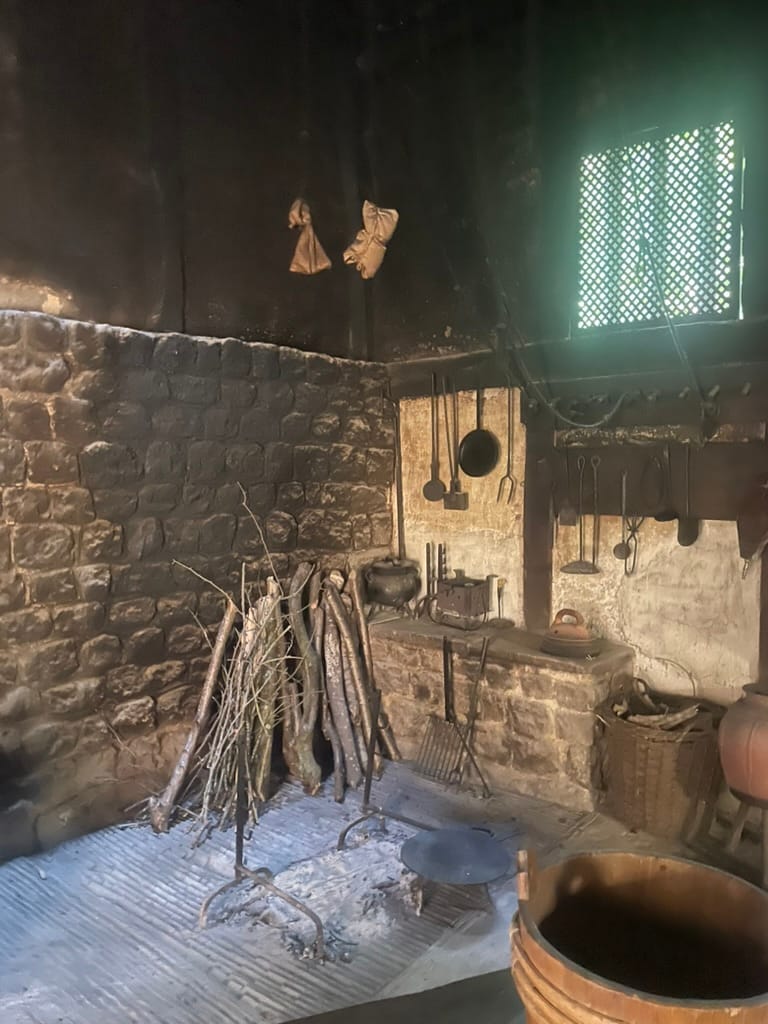
The heart of every English home, from every era before the twentieth century, was the hearth. Up until the Tudors (1500s) this was literally just a fire burning on the floor in the middle of the main room. Chimneys didn't exist, but this wasn't particularly a problem, one historian explained to me, since these ceilings were high and the rooms generally cold, so the smoke would collect above people's heads before filtering out through the roof. The smoke was useful in keeping pests away – people would hang their clothes in it to try to smoke out the fleas, for instance.
And more to the point, the big central fire was communal. At night, everyone in the household would gather round on stools and cook and eat and tell stories and stare at the flames. I think this is true everywhere for most of Homo Sapiens' history. The wealthier you were, the more space you had for other people to join you around your hearth.
In England, this changed with Henry VIII (at least, this is what one of the wonderful historian-actors at the Weald & Downland museum told me, before she taught me to MAKE BUTTER WITH MY HAND AND A BOWL, which felt like literal magic, so I'll believe anything she tells me). Henry copied the idea from the French that the way to show off how important you are is by how difficult it is for people to access you, so the fashion in wealthy houses changed from one huge communal room to small sitting rooms with a private fireplace, each needing its own chimney, where only you and the Important Person could sit and discuss your matters in private. This was the beginning of the fracturing of English communal life into individualistic striving, expressed through the design of the houses we lived in.
Every year, the museum hosts a "residency" where a group of amateur historians commits to living as people used to in a certain time of history for over a week, a digital detox on steroids. What's so striking about hearing them report what the experiment feels like is how much fun they have, even though it's freezing February and they work all day. A lot of it, I'm certain, is simply that they're almost never alone. They sing together, work together, tell stories for entertainment, eat together round one big fire.
I'm sure they probably wouldn't want to do this every day, but what fun to do it for a while. I'm sure this is the historical society's version of fantasising about moving to a commune with their friends, or maybe just of taking a break from the modern world.
Okay but here's what's hilarious to me about the fact that I'm so occupied by the commune fantasy at the moment: it's not miles away from what I grew up with! Everyone in my family lived in big sprawling multigenerational households, out of financial necessity! It mostly sucked! I couldn't wait to get out of there and strike out on my own!
And this is true for most people all around the world, actually: the moment we can afford to live on our own, we usually choose to.
We want so many things that are bad for us, though. I want to subsist on a diet of purely heavily salted slap chips. I want a snow machine in my living room that permanently showers me in cocaine. When I'm depressed I want to stay inside the house alone watching Buffy the Vampire Slayer all the time despite knowing rationally I will be so much happier if I don't. And despite having organised a huge chunk of my adult life around the goal of NOT living with housemates/my family, I sometimes wonder if I'd be much happier if I did.

I've been reading Hedley Twidle's remarkable psychogeography essay collection, Show Me the Place. One of my favourite chapters is "The Utopia Project", about a time Hedley volunteered to write a Code of Conduct for an intentional living/Buddhist community in the Western Cape. As my partner, an engineer, likes to say: "every safety rule is written in blood", and in writing this rulebook Hedley learns way too much about the various micropolitics and internecine dramas that have plagued this place, as they plague every utopian project.
"[Guests would look around at the beautiful surroundings and think] this was the place where your long-suppressed dreams of a different life might finally come into being. A better life, the counter life that you should have been living all along. And that was just the problem, said Maxine, the owner. No sooner had people arrived than they began to have designs on it: they wanted to make it into their version of the good life. Every week brought another round of guests or seekers, another genre of alternative living. Buddhist retreats and gut cleanse workshops, song circles and sweat lodges, tantric masterclasses (by invitation only) – they all passed through, each with their own dietary requirements."
All real-world attempts at utopias are failures. They can't exist; they're fantasies. It's in the word itself, utopia in the Greek meaning both "good place" and "no place", a kind of punny joke about how a perfect place can't really exist. People who try to build utopias either revert to terrible totalitarianism in applying their vision of the good ("there's always a little Hitler in there somewhere" Hedley jokes) or have to make peace with reality's grubby little hands getting all over it.
If I'm totally honest with myself, there's certainly an ugly eugenic impulse in my commune fantasy, because my imagined commune is made up only of other people of roughly my age and income and abilities. Most regular multigenerational households are more accurate reflections of society, where at least half of its members need much more than they can contribute (by virtue of being very young or very old, ill, disabled, unemployed etc.) One day I'm sure I'll be most of those things, but while I'm not, it feels like a wrench to compromise my lovely freedom with care work. My fantasy is of care equally distributed amongst equals, only, and that's monumentally selfish, I know, and I'll probably regret this attitude when I'm old myself.
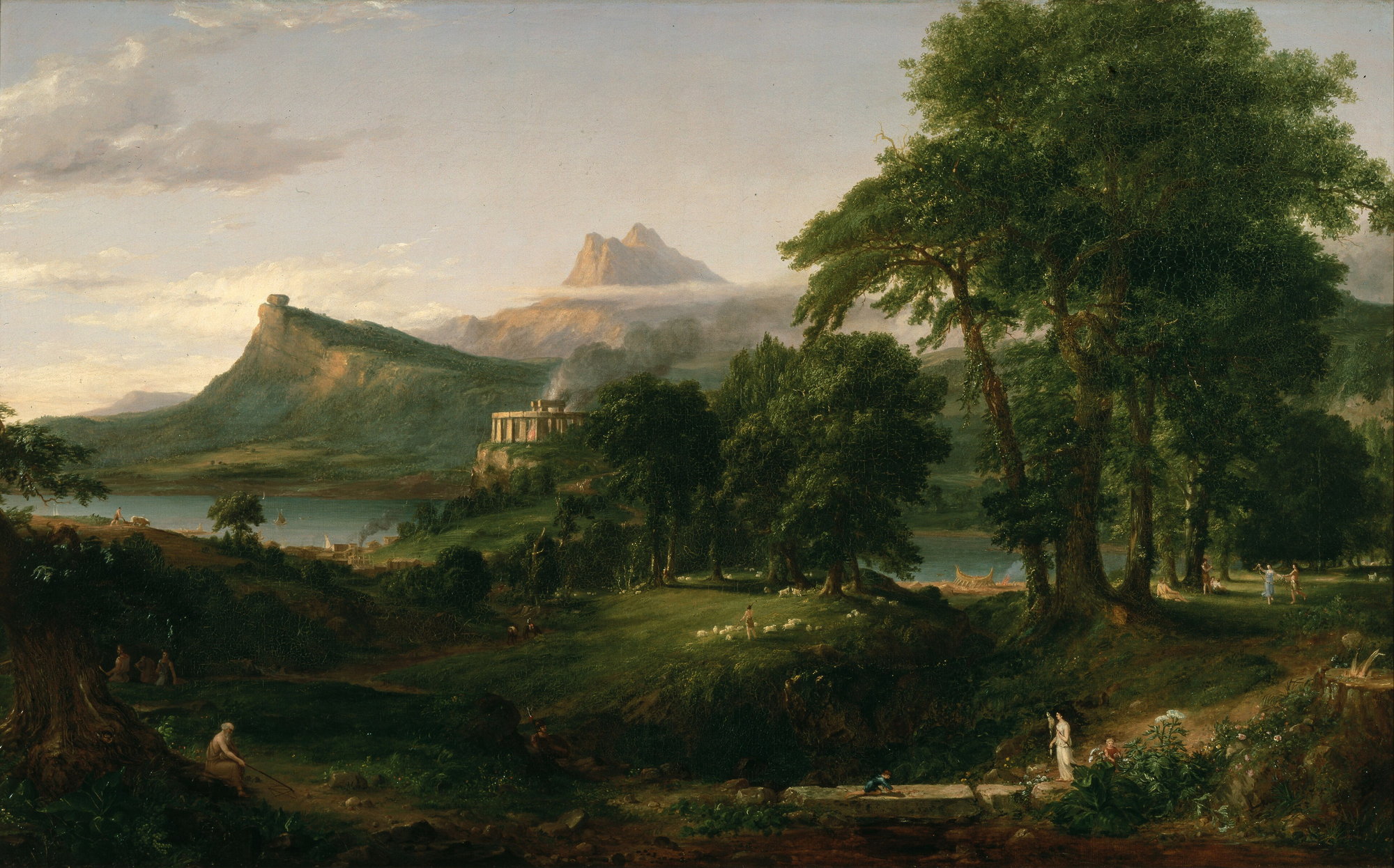
Our fantasies are instructive. My therapist is always telling me it's worth paying attention to my fantasies, and be curious about them, even though it's seldom a good idea to try to act them out wholesale. What is the commune fantasy telling me? Probably just that I need to spend a little more time goofing with my friends, or at least not feeling guilty about it when I do. Less working with my mind and more working with my body. Perhaps that I need a little more hope.
In his essay, Hedley says what drew him to the Buddhist centre was that he was feeling tired of the "safe, professional pessimism" of academia (of, I would argue, internet culture too) and was craving some exposure to "risky optimism". He quotes George Orwell, maybe the most famous dystopian of the twentieth century, who wondered whether it was wrong to take so much pleasure in vegetable gardening, his favourite pastime, when there were such big problems in the world. "To put it more precisely, is it politically reprehensible, while we are all groaning, or at any rate ought to be groaning, under the shackles of the capitalist system?" Hedley quotes. "If a man cannot enjoy the return of Spring, why should he be happy in a labour-saving Utopia?"
We don't all need to move to a commune. I'm convinced you get 50% of the benefits of a commune just by living within "PJ distance" of people you love (a distance you'd feel comfortable walking over in your PJs). My partner and I nearly moved to a Coliving community in Cambridge a few years ago, basically because we were so traumatised by moving to a new country during Covid. Instead, we made a map of where our friends live in London and moved to the richest concentration of dots, and now we live within walking distance of 10+ of our friends, and it's been bloody life-changing. When I'm entertaining the commune fantasy I like to browse Supernuclear, a blog that interviews members of various communes/coliving situations/cults around the world (with an unfortunate overrepresentation of San Francisco techbros), but they also have some wonderful practical guides to just getting to know your neighbours better (here, and here, also here), which honestly gets you halfway there, plus you don't have to swap out all your clothes for linen sackcloths and dedicate your life to lentils.
I also think big group projects give you a lot of this energy. There are few things that weave a group of friends together as well as collaborating on something fun and stupid over several weeks. I have mixed feelings (to say the least) about Afrikaburn, but some of the best memories of my twenties involve me and my friends building gloriously silly artworks in the desert.
So, how do you bring a tiny morsel of commune energy into your life, friends? Why not invite your neighbours to a potluck, or start planning an elaborate Halloween party that requires your kith and kin to make a bunch of decorations together, or set up a property alert for rentals advertised on your street so you can share them with your friends when they become available, or phone an elderly relative, or grow a single marrow in a pot on your balcony?
Far too many of us are alone and lonely, and exhausted from working, and unable to afford our bills any more, and scared about global politics and the job market, and just too bloody tired to imagine that there might be small concrete ways we can make our lives better and our communities more resilient. But as Hedley quotes, from a piece of graffiti from 20th century South American anarchists: "Let's save pessimism for better times".
Wishing you a warm hearth and vegetables the size of your head,
Sam
A few other lovely things
- A deliciously dark novella you can read in an afternoon: Such Small Hands by Andrés Barba, it gets at something honest and strange about how children see the world.
- On Catriona Silvey's recommendation I've just started reading There Is No Antimimetics Division, which is a sci-fi novel about a government agency fighting a force that no-one can remember they're fighting, and holy shit you guys it's so twisty and clever and delicious. Highly recommend.
- Loved the final season of The Bear. I'm a sucker for stories of people who find satisfaction in their work and I love the compressed timeline of this show. I thought this was a deeply profound ending, where someone recognises that their reasons for wanting something were always corrupt and maybe they'd be happier trying to do something else. Sometimes it's best to let go of a dream. That's a very wise thought I can't recall seeing expressed so well in another tv show.
- I've been eating so many tomatoes, mostly in Samin Nosrat's excellent tomato vinaigrette.
- I've been battling a bit of a pain flare-up in my back that's made it difficult to focus. In addition to hardcore prescription NSAIDs (god bless the NHS) and daily stretches (I have the best physio, Londoners hit me up if you need a referral) I've been finding Naomi Alderman's podcast series about chronic pain very helpful.
- I became a BRITISH CITIZEN this week and I'm over the moon about it. And in the same week that Count Binface became the person likely to defeat Nigel Farage, what a proud week to be British.


Member discussion