
Cut your electricity bills

Does your utilities bill look like a ransom demand? Babe, it's not just you! Electricity prices in South Africa have risen 900% since 2008. That translates to an annual increase of 15%. I'm going to take a WILD BET that your salary hasn't been rising that fast. No wonder you feel like you have to ration the hot water like it's Moët & Chandon.
Here's a practical action-plan for getting those bills (somewhat) under control. The first two levels apply to renters as well as people who own their own place.
Last updated: 20 July 2026
In brief
Electricity inflation is likely to only get worse over the coming few years. The order-of-attack for reducing your electricity bills:
- The single best low-cost thing you can do is buy a geyser blanket and insulate your hot-water pipes.
- Next, improve your energy efficiency through small swaps. Fit an efficient shower-head, reduce your pool pump hours, improve insulation and airflow in your home. Don't buy new big appliances until you need to replace them anyway (the exception: if your fridge/freezer is 20+ years old, get a more efficient one). Airfryers, lightbulbs and unplugging chargers aren't going to make much difference.
- If you can afford it, upgrade your geyser (solar or heat pump). This usually pays back within 2-6 years.
- Installing a solar system will likely take between 4-7 years to recoup the investment before you start saving money, and how long depends mostly on what municipality you live in (for some lucky people, it's even faster). It's only worth it if you're planning to live in the same house for at least that long, since a solar system might increase the value of your house if you sell it, but probably not by as much as you think. There are lots of options for funding solar installations.
Your energy bill will probably get worse over the next few years
We used to have a loadshedding problem. Now we have an electricity bill problem.
Unfortunately, even though the government has finally made some good structural reforms to start unbundling our energy system, Eskom remains in a death spiral that analysts have been warning of for years. Basically: Eskom's lost its biggest customers (who've mostly closed their businesses in South Africa), the countries we used to export electricity to (like Namibia) are now investing in their own renewable energy systems instead, municipalities can't pay, and billions of rands were wasted building enormous coal plants. So the lights are on but no-one can afford them. The death spiral works like this: energy prices go up, so we use less energy, so Eskom's income falls, so they have to ... you guessed it ... put the prices up.
There is no imminent plan to stop the death spiral. The government will have to keep propping Eskom up with bailouts until our energy system's been fully unbundled and there's enough capacity for alternative suppliers to keep the lights on throughout the country, and that's at least a few years away.
Look. I am not a witch and I can't predict the future, but I think there's every chance electricity prices are only going to continue getting worse over the next 2-5 years, before hopefully the structural reforms start to fix the problem. Assume the costs are going to continue to rise above inflation until then, and reduce your electricity usage as much as you can.
Just a warning, though: even if you use less energy, your bills might not drop by as much as you hope, because it's fixed charges that are climbing the most (the ones you pay regardless of how much power you use). That's why we're also going to talk about whether you should try to break up with Eskom completely and install a full solar system.
Stage 1 - Insulate your geyser
40-50% of a typical middle-/upper-income home's electricity is spent doing just one thing: heating water. So hone in on your bastard geyser like it owes you money.
The single best thing you can do to reduce your energy bills is to insulate your geyser and hot water pipes.
- A geyser blanket costs R250-700 and can save you R60-100/month. Easy to buy at your local hardware shop and fit yourself.
- Insulate the hot water pipes. The pipes closest to the geyser are the most important.
- Lower the temperature of your geyser to 55°C (don't go any colder than that, or you risk goggas growing in there).
- Have your geyser serviced by a plumber every 4ish years in normal water areas and every 2ish years in hard water areas (Joburg and parts of the Western Cape) to check it's working efficiently.
- If your geyser's old, or you're willing to spend a bit more, consider replacing it with a newer more efficient geyser or heat pump (see below).
A timer costs R500-1500 and can help, but you get much better ROI from rather insulating the geyser. It is worth turning the geyser off completely if you're going to be away for several days, though.
Stage 2 - Focus on small swaps that are worth it (and forget the ones that aren't)
Here's what a representative upper-income South African household's energy use looks like (assuming they have a pool, tumbledryer, aircon, 2 fridges and a deep freeze):
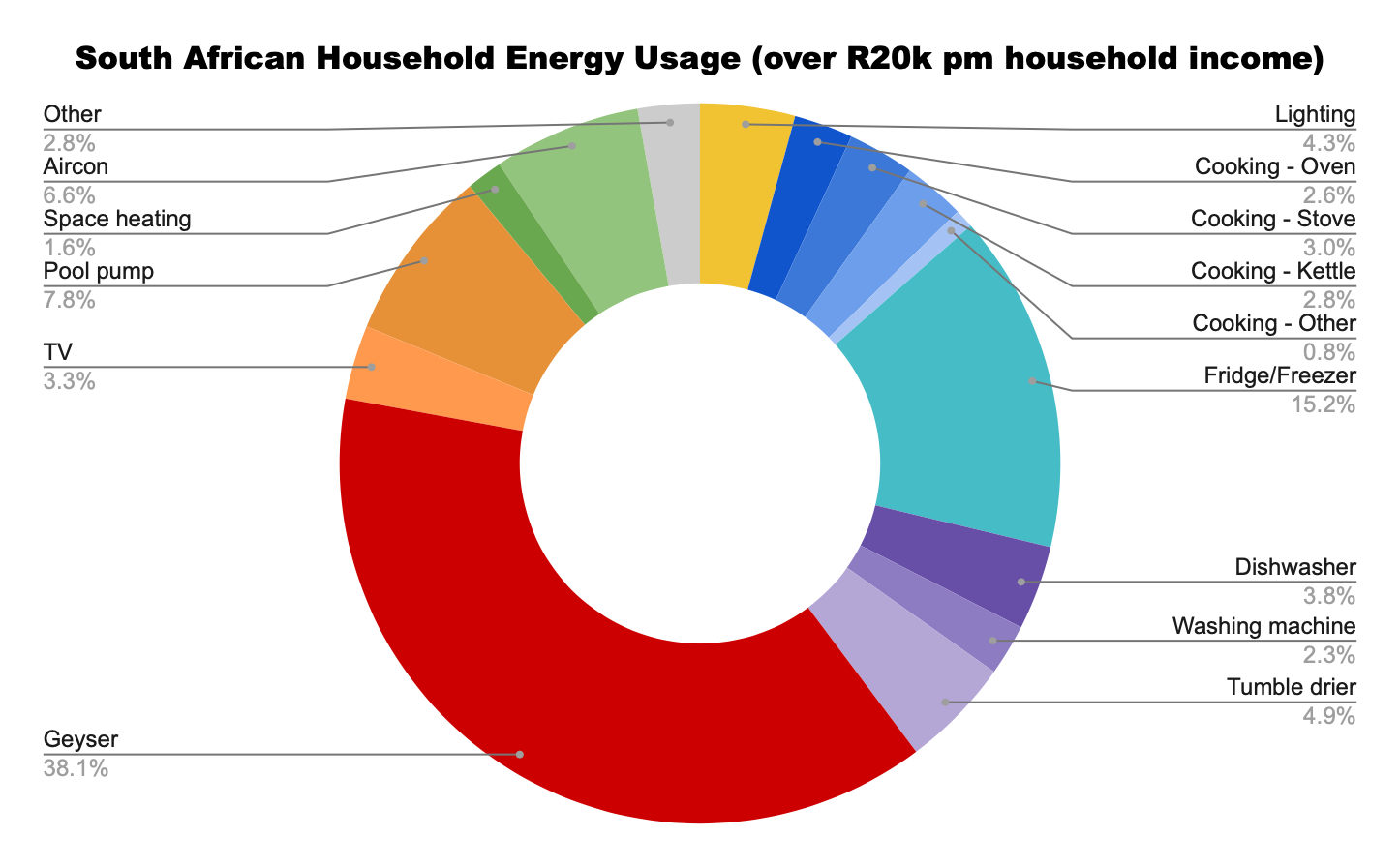
Amongst lower-income households, a much larger share of the energy goes into cooking, and something like the Wonderbag's going to make a massive dent. But you're living in a suburban home or a city flat, the most you could save by never cooking at all is 8% of your energy bill, so don't get too tied up in knots about air fryers and putting lids on your pots.
As with everything, start with the big culprits.
Here are the small swaps that are worth it:
- Replace the seals on your fridge and freezer if they're old.
- Replace your shower head with a water-saving one, especially if you have teens who think they live in a spa.
- Upgrade your pool pump to a more efficient one and make sure you're not running it for more hours than it needs. If you pay less for electricity at night, run the pump at night.
- If you’re blasting a lot of aircon and heaters, spend some time improving the insulation and airflow of your home. Simple fixes like heavier curtains, reflective film on your windows, painting your roof white, adding more roof insulation, installing security gates so you can keep more doors open in summer, and sealing gaps in windows and doors make a massive difference.

Only once you've done those, consider these:
- An air fryer is usually more efficient than an oven depending on your cooking habits.
- Replace your lightbulbs with energy efficient ones. Lights barely use anything but you have a lot of them and replace them often anyway. Anecdotally, one of my readers told me he replaced all his old 50W downlights with 5W LED’s, and it took almost 2kW off his house’s power load – the equivalent of removing a whole geyser!
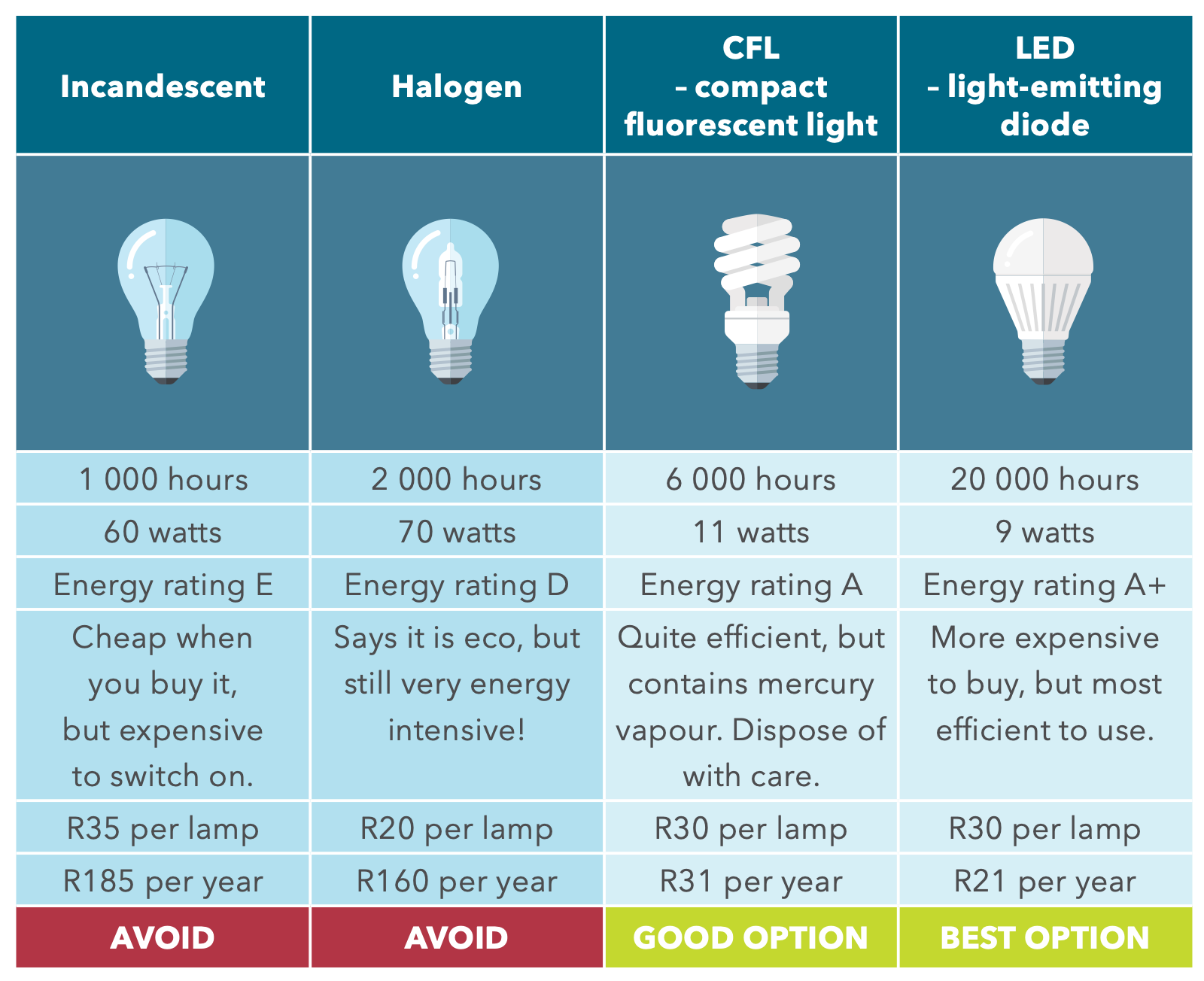
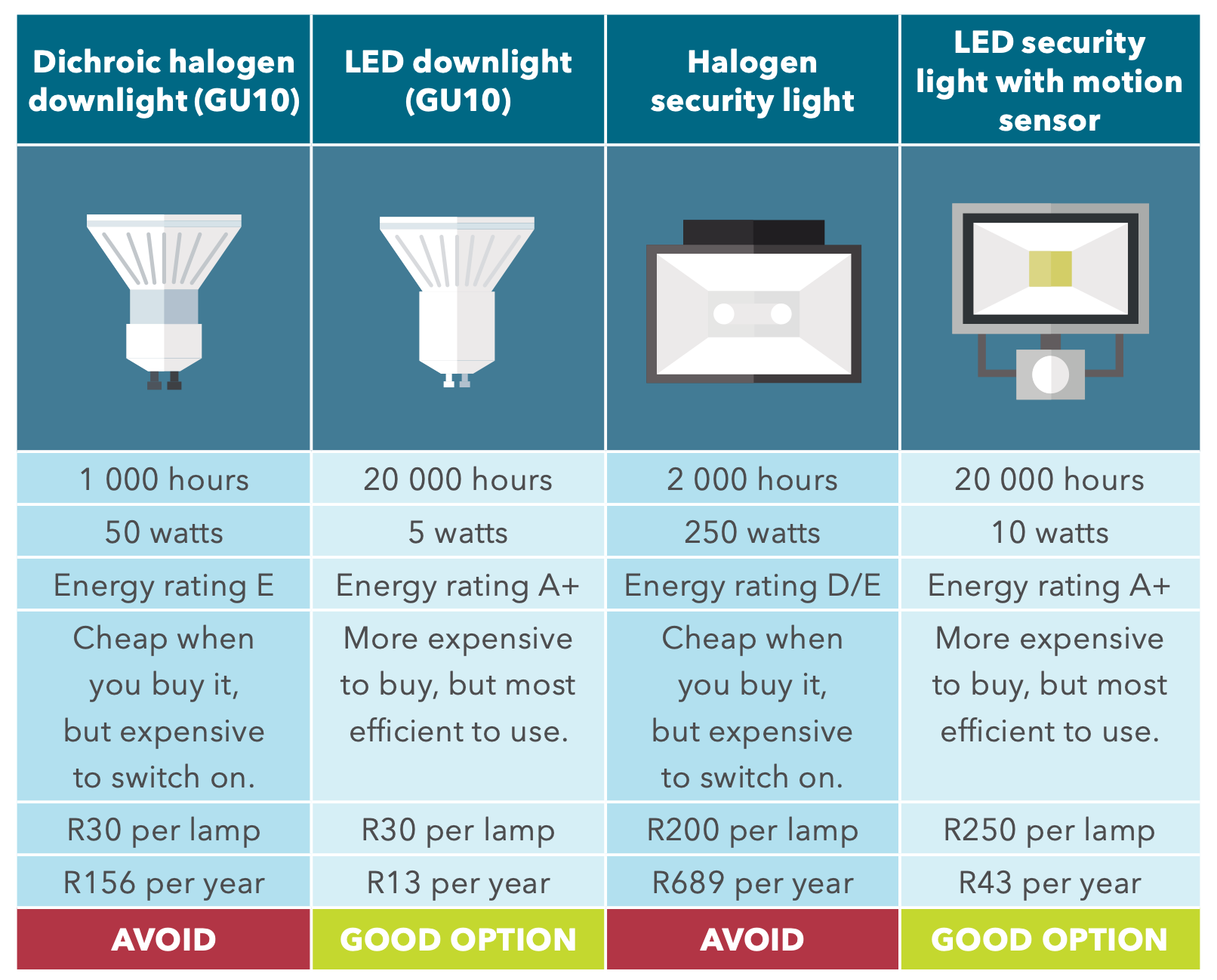
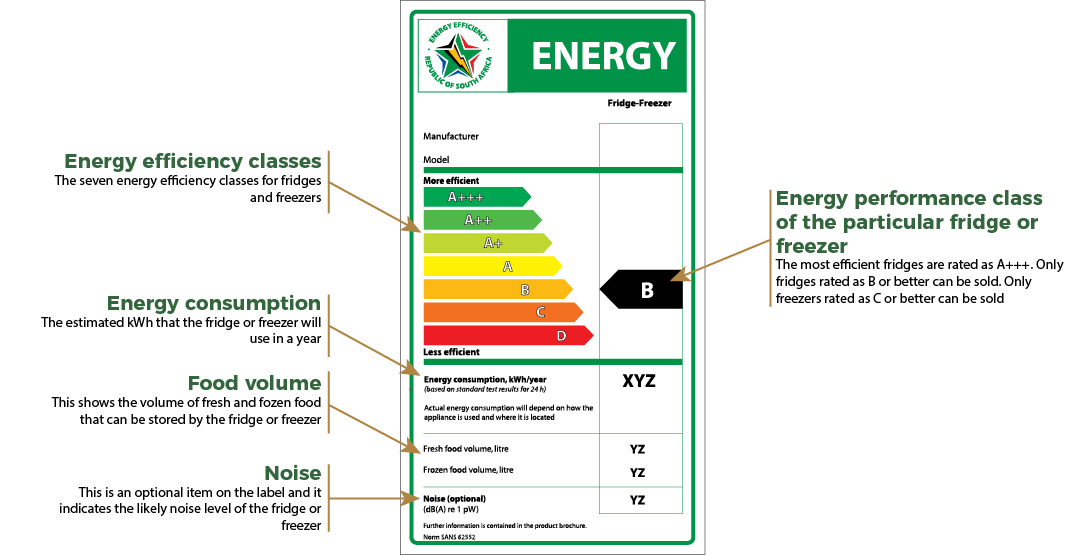
When your appliances die, replace them with the most energy efficient ones you can afford. It's generally not worth proactively replacing appliances if they're still working okay, with one major exception: if your fridge/freezer is old enough to buy its own booze, consider retiring it early. An old (20 year+) fridge/freezer(s) could be responsible for 20+% of your household energy bill, so replacing it with a more efficient one will likely recoup its costs within a couple of years.
When it's time to replace your stove, surprisingly, an induction stove is usually better value for money than a gas one (gas is cheaper per kWh than electricity, but a gas hob delivers less heat into the pot; induction wins overall). Although, of course, you've got to weigh this up against the benefit of still being able to cook when the power's out.
If you've made all these swaps and you're still using more power than seems possible, buy an energy monitor and check all your appliances one by one, or shell out to have a professional audit done. The culprit is probably something involved in heating or cooling (unless, I don't know, you have a 3-meter TV).
Stage 3 - Upgrade your geyser
If you've got a bit of money to throw at this problem, and you own your own place, I bet you can guess which device I'm going to suggest you upgrade ...
Yup, again, geyser.
There are broadly four upgrade options:
- Install a new, efficient gas geyser for R5-15k-ish.
- Retrofit solar tubes onto your existing geyser for R6-15k-ish.
- Install a full solar geyser system for R15-30k-ish.
- Install a heat pump for R15-35k-ish. A heat pump uses only 30% of the electricity of a normal geyser for the same output.
How long it will likely take you to recoup the costs of a new solar geyser or heat pump:
| Annual saving | R15k system | R35k system | |
|---|---|---|---|
| Bigger household | R9 012 | 1.7 yrs | 3.9 yrs |
| Smaller household | R6 442 | 2.3 yrs | 5.4 yrs |
All routes have their pros and cons, and the right choice for you depends on your budget, how much water you use, whether pump noise/refilling gas tanks will annoy you, and how sunny your roof is. Broadly speaking, though, a new solar or heat pump geyser system will pay for itself between 2-6 years. Solar tube retrofits pay for themselves even faster.
Whilst a gas geyser will save you money over a regular electric one, most people will get a better return on investment (ROI) rather installing solar or heat pumps.
The more hot water you use, the faster the system will pay for itself. If you're a big family with multiple teenagers, the payback is much faster than if it's just you and your cat. But basically, if you can afford to spend at least R5k, own your place, and are going to live in your house for at least 2 more years, it's probably worth upgrading your geyser. But how much you should spend depends on the details of your life.
As a starting point, I'd read the City of Cape Town guide comparing pros and cons of heat pumps and solar then get quotes directly from a Kwikot and ITS installer. Sadly there are no rebates available for solar geysers any more.
Stage 4 - Installing solar's worth it ... if you live in a solar-friendly municipality and have no plans to move
So finally there's the big question: is it worth it to install a full solar (PV) system, liberate yourself from Eskom, and ride off into the glorious sunset (that's powering your kettle)?
There's a reason this is step 4 rather than step 1. You will get a better return on investment focussing on the earlier suggestions than on this one. Even if you do install a full-shebang-bells-and-whistles solar system, you'll get the best ROI by also making your house as energy-efficient as possible first (you'll also probably want to put timers on your biggest electricity guzzlers to shift as much of your consumption to the daytime as you can).
Now. There are three different tiers of solar:
- Tied to the grid without batteries. R30-80k for 5kW. Save money only while the sun shines. Only useful if there are people at home during the daytime, or if you live in Cape Town (see below).
- Tied to the grid with batteries (hybrid/BESS). R75-250k for 5kW inverter + 10kWh battery. The batteries mean you can use your energy in the evening, plus it's a backup if there's a blackout. This is the option most people are looking at.
- Fully off-grid. R200k+ (and can be way more depending on your usage). Energy freedom, and the only option that fully protects you from the increased standing charges we can expect to keep climbing.
Now, most people do not have a spare R100k lying around, so the vast majority of people will either extend their home loan or take out a specific solar loan to pay for it, meaning you're also having to account for extra interest/monthly repayment costs.
Where you live changes the ROI on solar dramatically:
- Cape Town: the municipality pays you for money you feed into the grid, so a solar installation pays for itself fastest.
- Joburg (the City Power bits) and Tshwane: feed-in programmes are in the works (maybe??) but have been stuck in limbo for ages – tbh I wouldn't bank on them.
- In the rest of the country, it's a patchwork so check if your municipality offers a feed-in tariff (most don't). Some municipalities like Emfuleni are actually charging you EXTRA FEES for having solar panels – the audacity! – and some require you to install a wildly-overpriced bidirectional meter at your own cost. If your municipality doesn't offer a feed-in tariff, Chris Yelland has some spicy views about whether customers need to register their solar systems at all.
This is a pretty good free calculator for working out the return on investment for installing a solar system in your home, but I do find some of their defaults a little optimistic. For the most accurate result, I'd suggest using this approach:
- Use the tier 3 Professional solar planner calculator.
- Check your current electricity bill, and use this quick tool to estimate what size solar system you'd need and its installation cost, and input those details into the calculator. Add an extra 20% to whatever you're quoted as contingency (e.g. if your municipality makes you install a stupid R10k bidirectional meter).
- Use this article to estimate what size battery you might want to add. Add this to the Installation Cost number (to account for the upfront cost) as well as the Battery Cost number (to account for replacement costs).
- Adjust the Eskom annual increase down to 6% to be conservative (although I don't think 12% energy inflation is unlikely).
- Use the "Personal loan/solar financing" option even if you'd be adding it to your home loan, because this lets you adjust the interest rate and see what portion of your overall cost is simply interest.
For many people, a solar (PV) system is going to take between 4-7 years to pay for itself. But the maths on this is pretty personal and depends on how much you'd need, where you live, and how you'd pay for it – for some lucky people, loan instalments will be lower than your energy bill reduction and you'll start saving money from day 1.
The one number I would not believe that this calculator delivers is the estimated property value increase. The calculator assumes you will be able to recoup a full 70% of the installation cost if you sell your house. I'm sceptical. The numbers you see bandied about online ("solar will increase your home's value by 5%!!!") usually come from people trying to sell you solar systems, or were based on surveys conducted during the worst days of loadshedding, so can't be trusted. Safest to ignore this part of the calculation completely.
So here's how to make this decision: run the numbers for your household in the calculator and find out how many years it will take the system to pay for itself. Then ask yourself one simple question: am I likely to still be living in this house for that long? If the answer is yes, there's your answer.

The price of solar components (especially batteries) has been dropping dramatically while Eskom's costs keep rising, so the payback period maths gets better and better every day. Re-run this calculation for yourself annually.
If the numbers say yes, get a quote from your existing home loan provider and compare this to a specialist solar finance quote. Compare the total amount of interest you'll pay over the lifetime of the loan, not just the monthly cost. Remember the general rule that the longer you take to repay the debt, the more expensive it is.
If you can't afford to install the whole solar kit at once (even with a loan), another option is to buy an inverter that has enough capacity for the whole house's energy needs, but to add the panels as you can afford them.
If you're a freelancer/business owner and you work from home, talk to your accountant about whether you can access the Section 12B tax deduction for a portion of your home solar installation. That will help bring the costs down even further.
Solar's not an easy option if you're in a flat. Installing solar likely involves getting the whole Body Corporate to agree who owns exactly what inch of roof space, or to collaborate on installing a single large system for everyone, and, um, have you ever interacted with any Body Corporate? Unlikely to happen. If you are lucky enough to have a reasonable one, there are some specialist vendors who co-ordinate central solar systems for sectional titles.
Frustratingly, teeth-gnashingly, even if you install a grid-tied solar system you are still at the mercy of whatever standing charges and feed-in tariffs your municipality/Eskom/NERSA wants to charge you. The only way to truly liberate yourself from all this is a full off-grid system, probably also with a backup diesel generator, which is the option that takes the longest to pay for itself, and simply doesn't make sense for most people unless you're living somewhere really remote. Sadly, for most of us, true Eskom freedom isn't quite in reach yet, but keep checking the numbers – the maths on solar look better every year!
Some pro tips when choosing your home solar system
Advice from Fred Strydom, a SA Consulting Electrical Engineer who's installed solar in his own home:
- Carefully plan your system expansion if you are planning to install the system in phases. The systems are modular, but the tech and models tend to change quite quickly, and you might have compatibility issues if you wait too long. For instance, you can't mix different ratings of solar panels.
- It's worth springing for a larger (usually 8kW) inverter if you can afford it. Although it comes at a 15-20% premium on the cost, your gadgets are less likely to trip the power on heavy usage days. Plus you'll be able to install more solar panels if you need them later.
- If you can spend a bit more to get a hybrid inverter, do. You'll be able to add batteries at a later stage.
- Check warranties and cycles on the batteries. You typically want at least 6000 cycles.
- A lot of inverters have noisy cooling fans. If you're tight on space and will have to sleep near your inverter, consider a liquid cooled system instead.
- Make sure your home insurance provider is happy with your solar installation plans!
Final thoughts
I'd bet my last geyser blanket that over the next few years, energy prices are going to keep getting worse, solar components are going to keep getting cheaper, and that the people who are going to come out of this best are the ones who start tackling their energy bills now.
Start with the boring, unsexy, high value stuff. Insulate that villainous geyser before you go crawling around unplugging phone chargers. What will make the biggest difference to your energy bills are not shiny new gadgets, but the fundamentals of how you heat and cool things in your home.
And if you own a house, run the numbers about whether a new geyser or larger solar installation is worth it for you. You might have done this a few years ago when loadshedding was at its worst, but every year the costs have moved more in solar's favour, so check again.
You're might not be able to afford a full delicious divorce from Eskom this year, babe. But whatever your budget is, there are steps you can take today to pay them a little bit less.
Wishing you plenty of sunlight!
Sam
Key sources & extra reading
Alison Hughes and Richard Lamour's research report for the University of Cape Town Residential Electricity Consumption in South Africa was the source for the data I used to create the energy use chart and the "how long it will likely take you to recoup the costs on a new geyser" breakdown. The geyser savings assume a solar geyser or heat pump cutting geyser electricity 65%ish priced at R3.50/kWh. Any misunderstandings or errors about the research report are mine.
The claim that a solar geyser or heat pump usually pays back between 2-6 years is based on the City of Cape Town (which estimates 3-6 years) plus some of my own modelling, which gets some household types down to 2.
My understanding of the Eskom death spiral has been mostly informed by following Chris Yelland's in-depth work over the past several years.
If you're technically-minded, Eon de Koker has a fantastic detailed guide to home PV systems and an accompanying Excel spreadsheet model which allows you to play with the assumptions in more detail, but note that this is from 2024 so some of the cost assumptions may be out of date (things only look better for solar since then).
I played with manyyyyy solar ROI calculators when writing this piece and the one offered by mortgagecalculator.co.za is definitely the best. Thanks okes!
A mega-super-duper thanks to Frederik Strydom, SA Consulting Electrical Engineer, who helped me to (a bit) understand the nuances of PV installation! And to Matty P, my pet engineer, for proof-reading, and also for doing most of the actual real-world insulating of my actual flat, lol.
This guide was last updated in July 2026. If you spot anything out-of-date or wrong, please let me know! Thank you SMOOCHES love you!




Member discussion